Monday, 13 April 2015

Balancing the disciplines of Business Success

Whatever the business you own or manage (or both), the path to success is precariously balanced on the efficiencies of three pivotal disciplines: your Goals; the quality of The Plan to achieve those goals; and the Resources available to support and deliver that Plan.


Carefully considered and balanced realistically, these components create a steady base from which to reach that pot of gold. But is it really possible to unlock the profitable opportunities that hide behind the dramas of day to day business leadership?

 How do you set your goals and how do you measure your achievements?

If we sit around the table at an intime PROFIT Business Builder Boardroom Event to discuss goals, we would probably find that our personal objectives are similar - to build a sustainable wealth that will take us into a comfortable, healthy and enjoyable retirement. But if we compare corporate goals or at least the plans needed to achieve them, they may well be very different.

Here are some thoughts: 
Start with pragmatic goals and make them SMART:

Specific – It is likely that, to some degree, your business goals will reflect your personal goals and vice versa. The statement of intention should include specifics such as what, why, who, where and when. If the goals are vague they’ll be difficult to achieve by virtue of definition.

Measurable – you must be able to track progress and measure effectiveness, which follows on from specifics. Include values in your goals such as quantities, values and deadlines.

Agreed – whether or not you are the sole decision maker in the business, your decisions affect others either in the organisation or at home. Consider and include others for agreement in and of the planning process.

Realistic – goals should stretch current and past expectations. Such goal statements are broader than budgets and perhaps more strategic than targets. Is the goal achievable within the constraints of assets and skills within your control?

Time-bound – your goal(s) should have deadlines … by when will the goal be achieved? As well as the core deadline, key points should be included to help evaluate progress along the journey to success.

Well-considered goals deserve an equally well-considered Plan detailing the marketing, sales and operational processes needed to achieve success.

Business growth planning takes on many forms. The simpler, more specifically you detail your Plan, the more likely you’ll be to stick to it. Keep your planning relevant to the now. Rather than a strategic overview with SWOT appraisals of market positioning (we assume you already know pretty much where you are in competitive terms and your product, price, brand, customer balance have already been considered), this is a tactical Plan.

Your Plan should budget and schedule the additional sales and marketing activity needed to lift your product / service exposure to your core or fresh prospect base, sufficiently to achieve your Goal.

Very simply and generically – what might you consider?

Who / where / what is your market. Do you know your audience and how to reach them? Take a look at your sales in the light of the 80:20 rule and loosely model the 20% of your clients who deliver that 80% of your sales - you want more of them.

Image / message / presentation. Review your USPs and tighten the corporate proposition in a language your audience (that 20% model above) understands. Then think about its visual and physical presentation in a letter; on an e-mail; a postcard; banner advertisement; Google Ad lineage etc.

Consider the media opportunities to put your revitalised message on your audience’s desks, laps, screens, breakfast tables. Price the options and prioritise the activity. Then tweak the message to suit the platform / reader environment – one size does not fit all.

With audience, message and media sorted, schedule the invigorated activity ensuring that you have operational procedures in place to track the response and measure the effects. Employ Google ads with tracking through AdWords. Drive a Squeeze Page to build your database and ‘follow’ web visitors with a highly targeted Re-Marketing campaign.

ANYONE can employ such techniques. This is not highbrow jargon-driven marketing for the Big Boys (and Girls). It’s real, it’s sensitive … and it works.

Activity / activity / activity. The bad news - it doesn’t do it by itself. More sleepless nights? The Goal, The Plan, The Resources. Two out of three does not really work and without the Resources to effectively action The Plan…


Effective Planning is just one of the essential business development tools covered as part of the 7 Step Business Builder programme from intime PROFIT.

Through a series of Boardroom Events and One-to-One meetings over a period of 90 days, Business Builder members learn and apply valuable techniques designed to help them grow the businesses they own and manage.


The One-to-One meetings tailor the techniques covered in group sessions in the Boardroom, to your own business, its status, market, resources and goals using intime PROFIT's proven Three Step Process ... to Review, Plan and Action:
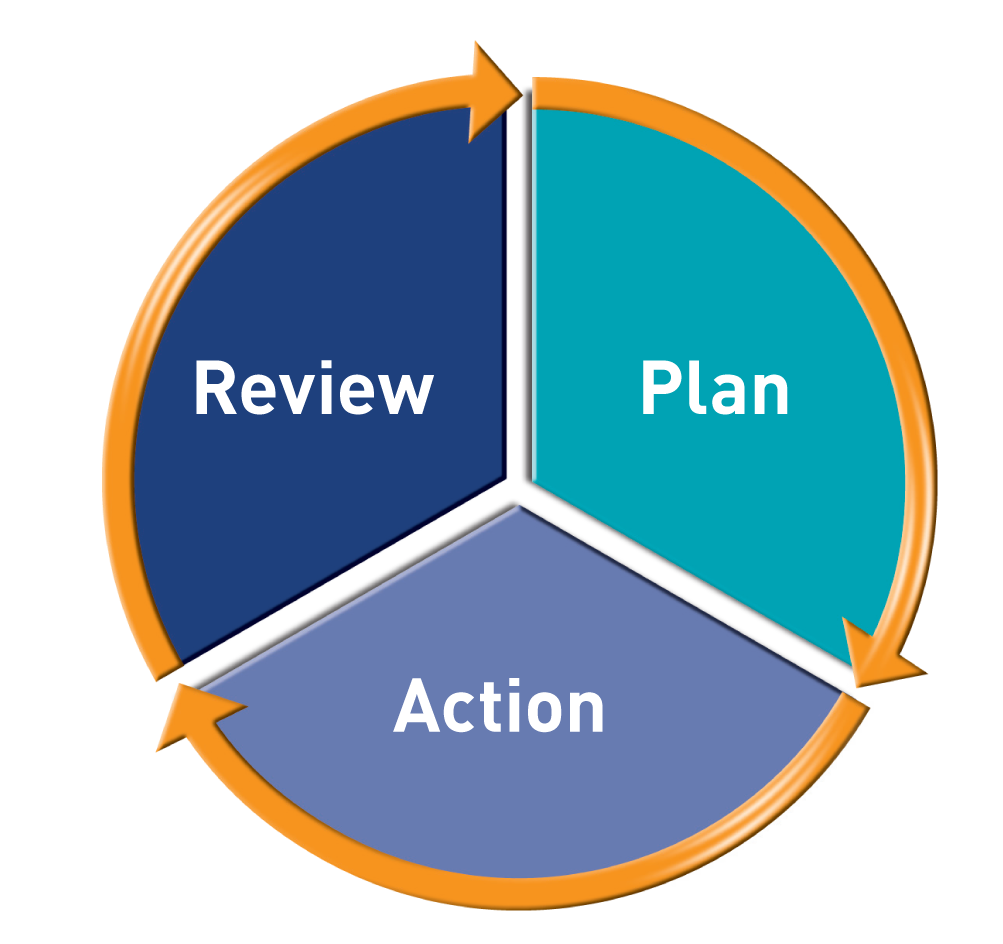
Review - We look at the current picture and agree on your aims and objectives.

Plan - Then we identify the specific activities needed to move you closer to those objectives.

Action - And we help you to make the commitment, action the key elements of the plan, tracking results for further review.


Call, mail, view and start making a difference today:

Call intime PROFIT on 08456 437 497 or e-mail intime@intimeprofit.com


Monday, 9 February 2015

Up to speed or just chugging along?

On a speed awareness course last week (46 in the 40 limited A14 road works at Kettering, 11.30 at night, quiet road…) the group of about 20 was asked … on a scale of 1 to 10 how good a driver do you think you are? Where 1 is ‘leave your keys and walk home’ and 5 is the average driver’.

Now, this was interesting for a number of reasons. When I have been asked the ‘on a scale of 1 – 10’ self-awareness question before to measure, for example, health, sporting activity, pensions adequacy, or just to feedback on the quality of hotel staff – I and I’m sure you have been told how poor the 1 is and how exemplary the 10 is.

But this course left its delegates to consider the values of 6 to 10 – just how good is 10 and how do you realistically measure it? Is excellence achievable?

This utterly mixed bag of social, age, sex, occupationally occupied and retired driving offenders answered 4, 5, 6 and a couple went as far as 7 – but nobody dared admit levels of perfection beyond that … and I’m an exemplary driver, it was just bad luck / one of those things / a lapse of concentration that I got caught.


In driving, the rules are clear and they even put signals and signs up all over the place to remind you and keep you on the straight and narrow…

…but in business management, there are no rules and signs, or if you see one (from the bank or solicitor) it’s probably too late.

Now try this question from the business driving seat:

On a scale of 1 -10 where 1 means you shouldn't be running a business and 5 means you’re just chugging along ‘but know you could do better – it’s just one of those things, but you haven’t been caught out … yet!’:

How well do you run your business?

Is it as profitable as it should / could be?

Are you generating enough qualified enquiries?

Are you converting the right type of client or customer?

Are you maximising the profitable returns on business turnover?

How good are you at stepping back to review the way you manage your affairs?

(And here’s a possible 10…) How much does business success equate to lifestyle achievement?

We can help you make a profitable difference to the business you run in exchange for a little of your time – time to work ON your business rather than just IN it.

We have the magic 7, aka the & Step Profit Multiplier

These are 7 determinable, manageable, changeable points each of which a relatively small change in business and marketing attitude / effort will increase the profitability of your business. Changing all 7 could (and we do mean could) increase your profits by 86%.


‘Hmmm’ – I hear you say (amongst other un-bloggable comments) and so did I when I first saw it. But it is very difficult to look at the platform without at least being intrigued and at best being inspired.

These are:
  1. Number of leads
  2. Conversion rate
  3. Transactions per conversion
  4. Transaction value
  5. Profit margin
  6. Number of referrals
  7. Lifetime buying cycle.


The Profit Multiplier suggests that: ‘just a 10% increase in each of the 7 ‘Alchemy Keys’ would give an 86% overall increase in profit’.

Could this take my 5 score, to a 10 … well via the 7 it just might.

Well, we’re OK with the theory, but in practice every business (even within a sector) is different. We have different keys representing different pivotal opportunities where positive change equals growth.

It is precisely because of these differences that, in Kent, intime PROFIT are introducing a 7 Step Business Builder programme. This assumes / accepts that you are a business owner wanting to unlock the hidden profitability of the business you run.

The Business Builder then starts with an initial interview with an intime PROFIT (ITP) Partner at which ITP and the business owner / manager effectively vet each other’s suitability. The Business Builder member then joins a programme alternating a series of Boardroom events with One-to-One meetings.

Boardroom Events introduce members to innovative tools to develop business profitably. These are deliverable methods to help generate and convert increasing numbers of quality enquiries and to turn more of these to profitable business sales and / or relations.

One-to-Ones help tailor a Business Builder Plan to your specific business and objectives, to review your business activity and goals and help build a plan tailored to deliver these goals.

Great opportunities here for businesses in Kent.

Back to driving, but in tandem with driving your business. Just as Stopping Time is made up of Thinking Time and Braking Time, so Sustainable Profitability is a combination of Thinking Time and its affect on Profit.


If you want to take a little time out to think, click the image above, call us on 08456 437 497 or e-mail intime@intimeprofit.com. Start making the difference today.


Thursday, 25 September 2014

Warm Summer - Cold Winter ?


It’s all too easy to lose track of goals and time during the summer, particularly a good old fashioned English summer of warm days and balmy nights. Now the kids are back at college and the roads are jammed with school runs, commuters and more white vans that ever before I realise that I’ve taken my eye off the ball.

Perhaps this was Tesco’s excuse. In trying to be all things to all shoppers, taking Lidl on at one end, Morrisons in the ‘market street’ middle and borrowing quality ideas from M&S at the top. Now, of course they have ‘borrowed’ basic financial husbandry from Marks & Spencer as Alan Stewart moves into his new office (same title) as chief financial officer at Tesco.

Why?

Well, instead of paying dividends to shareholders as promised during the heady heat of the summer, Tesco in fact opened their tills to find they were short a cool, almost chilling £250 million – or to give it its full breadth of zeros; £250,000,000. In simple terms it appears that they accounted for income not yet presented and ignored costs due.


In short, Tesco stock crashed 11.6% off the market value that flew off the shelves on day one. Now one egg short of an omelette they, like many businesses across the country, wish they had paid more attention to basic business detail.

These are the words of Penny Power OBE, entrepreneur and development coach, written for the preface of a new book – ‘Thinking Profit – the journey’ that I read this summer (get a copy on Amazon).

“The growth of new businesses across the world reflects how easy it is now to register a company, build a website and begin trading. This is fabulous, however, the growth in failures is a poignant statistic. Starting a business is easy, growing a business is the tough part. Over 90% of global businesses employ less that 9 people which in many cases is through choice, but in a large number is due to the skills in building a business that can export, scale, withstand competitors and knows how to manage itself through turbulent times.”

I underlined the key part: ‘Starting a business is easy, growing a business is the tough part.’

Because it’s tough and because it is all too easy to take your eyes off the ball – whether you are Tesco or the corner shop – you should take nothing for granted. Step back (try sitting on the opposite side of your desk, it offers a great perspective), take the phone off the hook, grab a sheet of paper (not a tablet, paper) and jot down the pivotal factors of your business.

Pivotal factors are key events that individually can swing business one way or another independently of other events.

What are the key (basic) elements of PROFIT:

£SALES X FREQUENCY = £INCOME    

£INCOME - £COSTS = £PROFIT

£PROFIT - £TAX = £NET INCOME

Now bring in the fulcrum for each event. QUESTION:

1.     How much can you increase the price of your goods / service to clients without affecting SALES?

2.     How do you increase the FREQUENCY? Is your marketing effective/ Are you communicating clearly? Could you articulate your proposition better?

3.     Is the COST of each SALE as good as it could be? Could you ‘buy better’ or do you need to buy your office inventory at all?

4.     Is your Accountant doing their job? Could you be more TAX efficient in the way you manage your money?

I hear you. There’s nothing new here. But how often have you been to a business seminar, read the agenda, raised your eyes to the ceiling in despair at the thought of wasting a whole morning here - then rushed back to the office after lunch inspired by the three bright lights that taking time out to consider even the basics, just lit in your head.

Each of the above, particularly SALES and FREQUENCY can be broken down further to identify their own pivotal events.

If you do nothing else, grab another sheet of paper (if only to doodle - you know who you are), identify three fulcra for SALES and three more for FREQUENCY and consider the effects of change on each.

It’s an exercise worth doing to avoid a cold winter.


To find out more about intime PROFIT:
our One-to-One,
our Seminars and
our Marketing support services –
call us on 08456 437 497.


Saturday, 15 March 2014

Is your website fit for purpose?

This month we want to consider websites – is yours fit for purpose? Indeed – is ours fit for purpose? To fit the intime PROFIT’s 3 Step premise (and promise) of Review, Plan, Action, this month’s FREE Marketing Report is intended to help you to review and build a website that ‘attracts business’. For your own FREE report, click here: intime@intimeprofit.com.

The report is intended to help those who wish to build their own sites from scratch, using template-based online design sites. Such sites have a purpose for which they are fit, but the templated structure is not right for everyone. They enable a simple, well-structured service presentation which is fine for simple business propositions.

If you have a creative flair, you can push the advanced options to their limits to round the otherwise boxy corners that are inherent when filling templates.

What the report is particularly good for is to help review the structure, content, support and efficiency of your existing website and to structure the ‘wish list’ when considering a re-build or re-brief.

What today’s blog intends to add to this, is the broader consideration of a website review –? Has your website grown (as many do) by simply ‘bolting on’ additional messages, services and whims so it resembles what was once a desirable suburban residence, now spoilt by random, unsightly conversions and extensions?

When you last closed the office door and took your phone off the hook to read your website (what do you mean you don’t review it?) did it say the right thing, in the right way, in the right order, to be clear to an audience you’d be pleased to do business with, so they can action the right levels of contact?

Let’s consider those key points again:

Does your website say the right thing;

We all spend time reviewing and refining the corporate message – from a succinct elevator pitch, to finely tuned correspondence, e-mail marketing, advertising, corporate literature and blogs. But is the message on your website still singing from the same hymn sheet?

In the right way;

‘It’s not what you say but how you say it.’ For those of you  who have been on an intime PROFIT seminar, you’ll know from the sales presentation parts of the itinerary the presentation – tone, style, posture – are as if not more important than the content. In the same way, tone and structure can add enormous power to the words you say on screen. Line breaks, paragraph lengths, column widths, font, colourways and … punctuation. Is your message written in such a way that the viewer will be able to actually read it.

In the right order;

This is crucial to a website and there are two sides to this coin. Imagine yourself standing by the podium about to present your business, services and ethos to a room full of prospects. You start with a sensible summary of what’s to come, then move logically through the process from one theme to the next, ending with a closing summary and chance for the floor to ask questions. So, that’s the home page, service development ‘chapters’ and contact call-to-action.
 
The flip side is that we do not know which page the viewer will start at or where they will go next. Because of this, each page must have its own start, middle and end with a clear, single-proposition opportunity to act and make contact.
 
To be clear to an audience you’d be pleased to do business with;
 
It‘s really very simple. Your web copy, structure, content and style should be built with your audience profile, needs and authority in mind – as should any corporate message and language.

So they can action the right levels of contact?
 
For the viewer to confidently click that all important contact button, the benefits they’ll gain by doing so must be clear and appropriate. We know what we want them to do and how, but how do we impart what they will gain and why? What’s in it for them? Again we need to properly understand our intentions and our audience needs. If we are just list building then perhaps free gifts, information and discounts might be appropriate. But if we are talking to senior decision makers for mutually beneficial corporate benefits then it’s the ‘benefit to need’ clarity that counts.
 
This, like each of the points above, is a massive subject in its own way.
 
To begin the process of clarifying
your proposition to build your business,
say hello to intime PROFIT today:


Tuesday, 25 February 2014

Getting the best from e-mail marketing


E-mail marketing is a cost effective way of canvassing various elements of your prospective audience; headlining a message; developing the proposition; and calling them to a specific action.

In many ways, the approach is no different to planning a direct mail campaign; re-soliciting to your prospect or customer database (CRM); running an advertising campaign; planning a joint venture even.

·         You need to understand who you are talking to;
·         what message you want them to take on board;
·         how you are going to say it so that they understand the benefits in their terms;
·         how you are going to headline it;
·         how might you visualise it;
·         and what you want them to do as a result of reading it. 

 
The process of applying each of the above to the selected medium then varies medium by medium. You can’t just take the advert your agency designed and paste it into an e-mail – although many do … wrong.

The content and style of your e-mail should fit the purpose. If you are writing to existing customers to announce an event – a sale perhaps – your audience is already warm to you and the style can reflect your mutual awareness. If you are renting and mailing cold data on the other hand, you are intruding on already busy screens alongside other market intruders all vying for reader time (and money).

E-mail marketing is easy to implement, low cost, scalable, accountable and most certainly worth a bash. But, even for a low volume, low-key start or test, it’s important to set it up properly. There are many ways of setting it up to do yourselves which are perfectly fine particularly if you have the time and inclination.

Set up an account up with a reputable server to take on the data, set the mailings up and action them for you. They can deal with matters of compliance, manage your unsubscribes, handle the data, and provide the analytics to help you assess the next step.

Building, renting, sourcing, selecting the data to be mailed is the next big step. It is true that because of the lower mailing costs involved in e-direct mail, you can afford to canvass greater numbers. We strongly advocate fine tuning your targeting through careful pre-selection though. If every player in the market put the effort into pre-selection, messaging would be more relevant, responses would rise (on an industry level) and spam e-mail rejection would fall.

Good news all round.
The whole concept of building an efficient database is a massive subject in its own right and one we will be covering at a later stage. (If you want advice in this area sooner though – please just ask: intime@intimeprofit.com).
Setting up and sending your e-mail is the fun part. What are you going to say? How are you going to say it? There are no real rules but, as you might expect, plenty of opinions.
 
If you are mailing a hot customer base with a fabulous offer pre-selecting the data by what you know them to have purchased before, then you can make a big, visual, simple flash  - YOUR FAVOURITE JEANS HALF PRICE. SAVE £20: CLICK HERE. Or something like this:
 
This is fine in B2C marketing.
 
There is a school of thought that in B2B, particularly when selling a business service to a broad, colder database, the closer your e-mail resembles a normal e-mail from Jane in Accounts upstairs, the better will be your Open Rates. Open Rates in e-mail marketing are like possession in rugby – if they don’t open the e-mail (possess the ball) there’s no chance of them responding (no try, no score, no point).
 
So, we do everything we can to lift the open rate
 
·         Soft, ambiguous, friendly subject (don’t mention ‘sale’ ‘offer’ ‘free’ … spam’s favourites);
·         Explicit, benefits driven opening line(s);
·         Bold, relevant development paragraph;
·         3 bullet points – max;
·         Clear, single call to action.
 
If you are going to use logos, branding, images etc, minimise the number and insert them after (yes, after) the message and call to action. Remember, not everybody has the same browser, so design your message to the lowest common denominator, a browser that does not show the pics without specific instruction to do so. If your message relies on an opening image or you are leading with brand images, your reader opens to a number of empty boxes with an x in the corner – delete.
 
 
Testing copy against copy; offer by offer; format against format is easy and cost effective in e-mail marketing. As well as your response and conversion rate you can and should measure your open rates. Even measure your unsubscribes and bounce backs. Imagine being able to drive round to the 100,000 recipients of your last direct mail campaign, look in their dustbins and count how many envelopes there were opened and unopened.
With e-mail, the analytics tells it straight. The knowledge is power and the power delivers better results each time you mail.
To receive your own 26 page E-Mail Marketing Guide, please e-mail: intime@intimeprofit.com


Sunday, 26 January 2014

Make the 90 Day Promise – and let your business grow


We want to tell you about some quite radical changes being made to intime PROFIT’s Business Development Seminars for 2014. They’ve been very well received throughout the past year and feedback has been most encouraging – with just one exception.

The most common comment from regular delegates is that, despite knowing they need to take time out to work ON the businesses rather than simply IN it, the commitment of a full day is rather too much. We listened, considered and – presto – from 13th February 2014 intime SEMINARS will gather over lunch for a sharp, focussed, business growth agenda in the afternoon only.

So, a half day rather than a full day in which to listen to and learn skills and ideas to lift your business and its profitable outlook during the year ahead.

It does mean that we need to sharpen up our delivery, but thanks to the team behind the seminar programme that’s not as difficult as we initially thought it might be.

The seminar content is intended to develop a practical, deliverable collection of skills, observations, tasks and techniques all designed to help grow profitable sales. Learn:

how to create more leads and enquiries;

how to convert more of these to high value sales;

how to improve sales margins and extend client relations;

how to generate referrals and exploit joint ventures – all this and much more.

So … Make the 90 Day Promise!

By taking just a half day out of the office each month to join other like-minded business owner managers, you will make a big difference to the business you run.

In the first three months (that’s just 90 days) of the exciting year ahead:

1.     Learn skills and techniques to generate more leads;

2.     Build and write a finely tuned USP;

3.     Follow a methodical path to improved conversion rates;

4.     Build systemised sales procedures;

5.     Discover simple, sustainable ideas to increase sales values;

6.     Empower business networking with a revitalised ‘perfect pitch’.

…and that’s what you’ll cover in just the first three of seven seminars.

Something else that’s new for 2014 is intime PROFIT’s Foundation Seminar.

The Foundation Seminar is for new delegates and may also be attended by past attendees wanting a refresher. It is held on the morning of the main seminar day and covers the vital details of the 7 Key Profit Multipliers that become core deliverables for the main seminar programme.

The Foundation Seminar introduces the 7 Keys and the subsequent seminars develop techniques and skills to multiply each one.

What’s more – your place on the Foundation Seminar is FREE

There are two Foundation Seminars planned for Kent, one in Chatham Maritime starting 09.30 on 13th February and the next in Maidstone at 09.30 on 13th March. Tea / coffee is served mid morning and we close over a sandwich lunch during which delegates meet, greet and share Kentish business opinion and opportunities. You’ll also meet regular attendees as they gather ahead of their afternoon seminar.

Well, the bottom line is ultimately down to you and how much you want or need to grow your business and unlock the hidden profitability within it. If you want to generate and convert increasing numbers of quality enquiries and to turn more of these to profitable business sales and / or relations, then these intime PROFIT Seminars will equip you with the tools, the plan and the energy to go back to your desk and make it happen.

For more details and to confirm your FREE place please call 08456 437 497
or mail intime@intimeprofit.com.


To find out more about intime PROFIT:
our One-to-One,
our Seminars and
our Marketing support services –
call us on 08456 437 497.


Friday, 20 December 2013

Eye 2 Eye – a 20:20 Maidstone business.


For more than 16 years, brothers Chirag and Manish Patel have proved that you needn’t have gone to Specsavers after all. Against the high street branding and million pound advertising campaigns, Eye 2 Eye clearly demonstrate that there is life in the world of Independent Optometrists – opticians to you and me.


Based in Allington on the outskirts of Maidstone, Eye 2 Eye draw patients from all over Kent, including Tunbridge Wells, West Malling, Sittingbourne and Ashford. So what makes people travel so far to have their eyes checked?

Healthy eyes are important to us all and a healthy eye is one that does more than simply see well.

We like to be healthy, to see well and to look good. It’s this trio of needs that, if satisfied at an affordable price, keeps the patient happy; willing to come back for their regular check up; and more than happy to recommend to friends.

Eye 2 Eye ticks all three boxes – the first being health. Having invested the Zeiss Cirrus HD-OCT 500, Eye 2 Eye promise exceptional healthcare as well as sight testing expertise. Optical Coherence Tomography (OCT) is a technique for obtaining sub-surface images of translucent or opaque materials at a resolution equivalent to a low-power microscope. It is effectively ‘optical ultrasound’, imaging reflections from within tissue to provide cross-sectional images.


Within the range of non-invasive three-dimensional imaging techniques that have been introduced to the medical research community, OCT as an echo technique is similar to ultrasound imaging. Other medical imaging techniques such as computerized axial tomography, magnetic resonance imaging, or positron emission tomography do not utilize the echo-location principle.


OK – to you and me that all means you get a thorough health check with immediate results showing on the operator’s screen in the form of a three dimensional colour cross-section of the minutest pathology of the eye. They can see, identify, diagnose and record even the slightest imperfections immediately and refer the patient accordingly.

So, patient peace of mind and great looking specs as well.


Despite not having the buying power of the high street brands, Eye 2 Eye know that seeing well and looking good are the two other boxes to be ticked for client  patient satisfaction – and they have. The range, the quality, the brands and the service are all second to none, yet, the prices are comparable.

So, it is quite clear how an optician such as Eye 2 Eye remains successfully independent. Success is down to Chirag and Manish Patel’s attitude to service and excellence  - their patients see well, look good and can rest assured that the health of their eyes is in good hands too.


For every successful business there’s always more to learn, more to do and more to achieve. To this end we look forward to seeing Chirag and Manish at intime PROFIT’s Foundation Seminar in Maidstone on 16th January.


To find out more about intime PROFIT:
our One-to-One,
our Seminars and
our Marketing support services –
call us on 08456 437 497.